
A Parliamentary Philippines with Mandatory Weekly Questioning Will Be Better Than Its Mandatory Yearly Presidential SONAs
Rappler

I must admit that ignorance of the difference between the parliamentary system vs. the presidential system is there. Some people still insist on the myth that the first Marcos Administration headed by President Ferdinand R. Marcos Jr.'s late father, Ferdinand E. Marcos Sr., was really a parliamentary system. In reality. the Marcos "parliamentary" years during the Martial Law era, were still presidential (read why here). A simple research would show that Cesar Virata was called by the late Lee Kuan Yew, as a non-starter and no leader. LKY would know how a real parliamentary system works.

Sure, it's one thing that those who consider themselves Dilawan, voice their criticisms. However, the big problem of the Dilawans is their focus on political idolatry rather than solutions. I can talk with the Dilawans all they want that we do need to shift to the parliamentary system and some of them still cry foul, say that it'll be a repetition of the first Marcos Administration, and gossipers like Mrs. Raisa Espinosa-Robles still insist that they were parliamentary. It's a failure for Mrs. Robles' mind, really, considering that she's written in international publications. Either Mrs. Robles is plain condescending to blind herself from the facts or she knows she's lying. Anyway, it's easy to bash me because I'm just another blogger, an ordinary citizen, and Mrs. Robles is a journalist and has written for the South China Morning Post a couple of times. However, in this digital age, we can now search for information or even pay for information online ot get what we need. Seriously, Mrs. Robles needs to prove her claims to Malaysia and Singapore that the first Marcos Administration was a parliamentary government!
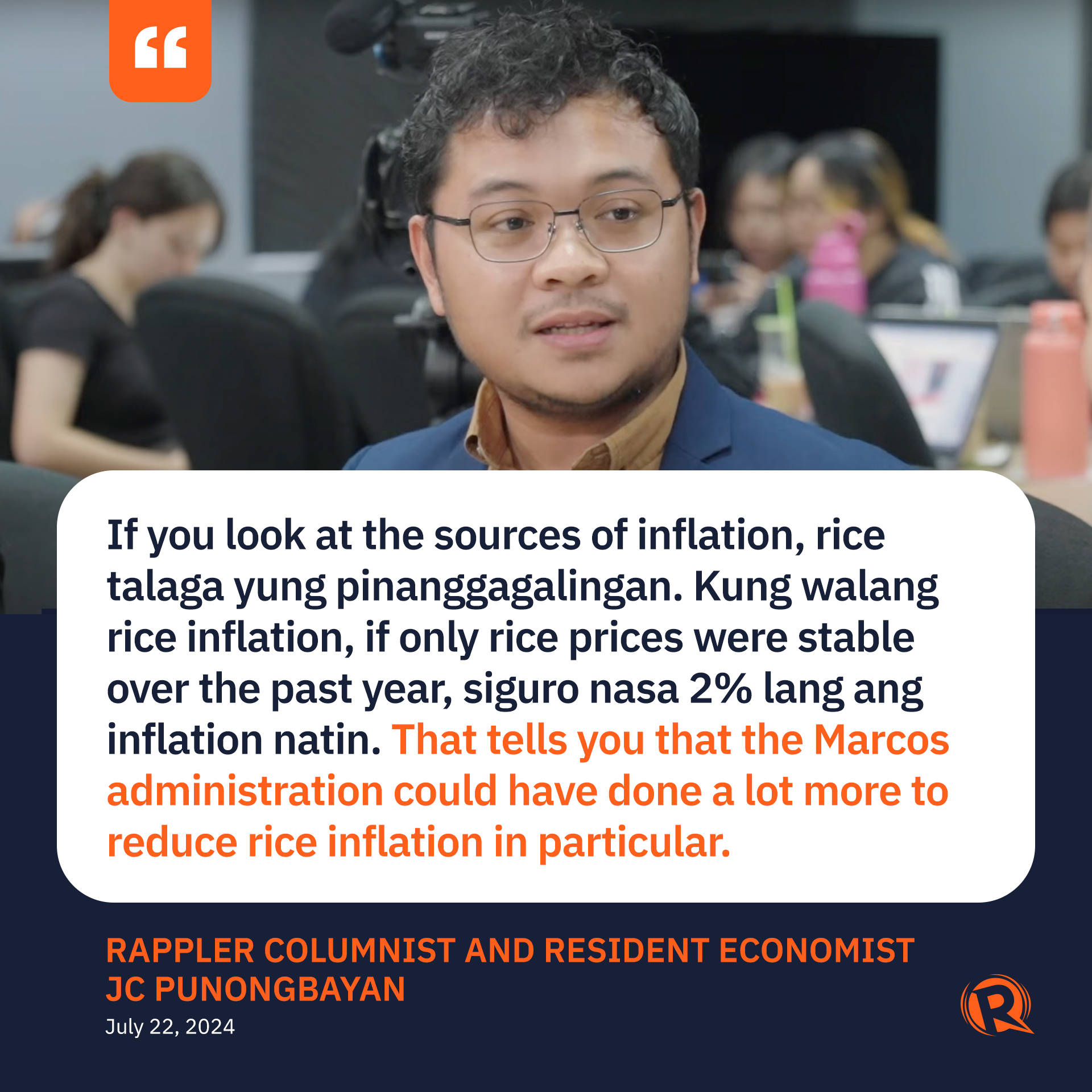

I was looking at Rappler columnist and resident economist, Jan Carlo "JC" B. Punongbayan, PhD. I believe we need to have an Opposition to criticize the Government. However, under the current 1987 Constitution of the Philippines--we are still under a presidential government. I'm not saying it's the worst constitution in the world but it's not the best either. One should really look at mistakes in the constitution, offer amendments, and if possible, write a better constitution carrying the good and doing away with the bad. If the Dilawans believe that they can hold President Marcos Jr. accountable merely through Facebook (or other social media platforms) or press conferences--I dare say they're dreaming.

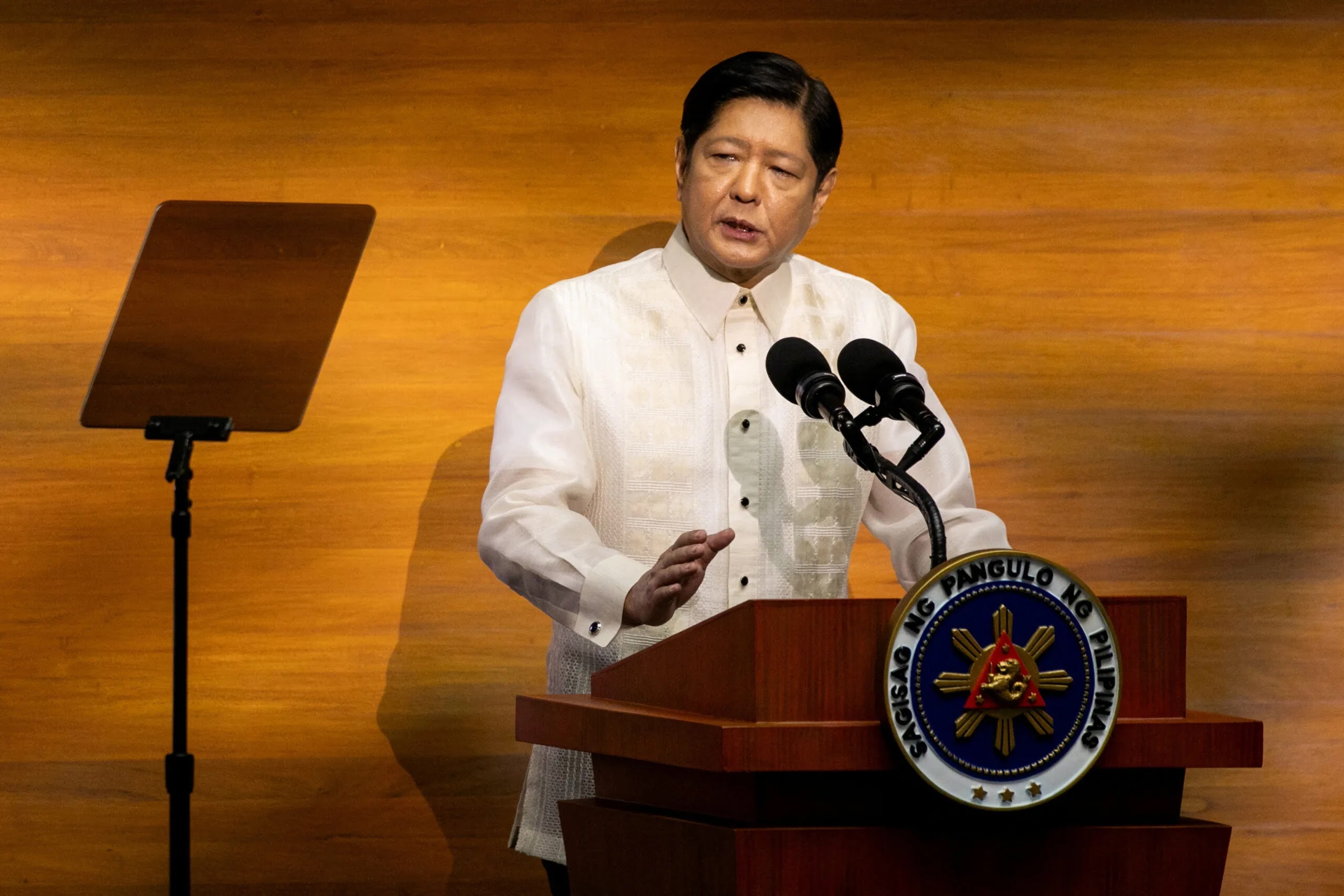
If we think about what a State of the Nation Address (SONA) is--it's that time of the year when the president addresses the nation. It's something that's mandated in the 1987 Constitution of the Philippines. Sure, the preamble and so and so can talk about this and that. It's written in Section 15 of the 1987 Constitution of the Philippines:
Section 15. The Congress shall convene once every year on the fourth Monday of July for its regular session, unless a different date is fixed by law, and shall continue to be in session for such number of days as it may determine until thirty days before the opening of its next regular session, exclusive of Saturdays, Sundays, and legal holidays. The President may call a special session at any time.

Let me ask how the Dilawans expect to keep check and balance with just doing press conferences. For example, can the Liberal Party of the Philippines members like former vice president Atty. Maria Leonor S. Gerona-Robredo, Senator Mrs. Ann Theresia "Risa" N. Hontiveros-Baraquel, Atty. Leila De Lima, Paolo Benigno "Bam" Aquino, etc. expect to hold President Marcos Jr. directly accountable just by talking on the media? Sure, one can say that the SONA keeps the president in check. 

PARL

However, that's very different compared to how a parliamentary system works. Under a parliamentary system, the governing party is scrutinized directly by the opposing party. For example, if the government is dominated by Uniteam--the opposition is dominated by the Liberal Party. Parliamentary questionings are done every week. Mrs. Robredo's supporter Andrew J. Masigan wrote in "Understanding Charter Change" the following truth of the parliamentary system, something not present at all during the first Marcos Administration:
A parliamentary system is one where a “shadow Cabinet” exists. A shadow Cabinet is the corresponding, non-official Cabinet composed of members of the opposition. Each Cabinet minister has a shadow equivalent who is mandated to scrutinize every policy done by the official minister. The shadow minister may offer alternative policies which can be adopted if it is deemed superior.

Going back to Punongbayan, PhD, from the UP School of Economics--I would like to say he may not just be saying things on media right now. Instead, Punongbayan, PhD, may become one of the shadow ministers under the leadership of either Mrs. Robredo or Mrs. Baraquel. However, my preferred illustration would be the Liberal Party under the leadership of Mrs. Robredo and Atty. Francis "Kiko" Pangilinan because of the presidential campaign. We can imagine Punongbayan, PhD, having been appointed to Mrs. Robredo's shadow cabinet, as the Shadow Minister of Economics. Punongbayan, Phd, will not only raise up the issue like he did--he will also be required by the parliament to come up with alternative policies.

Even better, both Uniteam and the Liberal Party are face to face against each other. As a video by Aris Olea on Facebook said, "The Liberal Party should be the Opposition in parliament now." That means the Liberal Party (or I'll call it the Robredo Opposition) should be questioning the Marcos-led Government in person. The weekly questioning requires two sides of the coin to talk to each other. The Robredo-led Opposition questions the Marcos Government. The Marcos Government must answer right away. Mrs. Robredo and company would still have a voice only if the Philippines were a parliamentary government. 

Fortunately, some Liberal Party members are supporting charter change. It's time to really take the people's initiative. For a real working opposition, charter change from presidential to parliamentary is needed. As always, never believe that the Marcos Years were under a parliamentary system. 

Popular posts from this blog

What's the Use of Complaining About Celebrities and Political Dynasties Running for Politics While DEFENDING Presidential and Rejecting Parliamentary?

2025 is just around the corner for the midterm elections . People keep emphasizing the need to "defend the 1987 Constitution of the Philippines" for any amendments whatsoever. If that were true then we really need to remove Article XVII entirely if the 1987 Constitution of the Philippines was meant to be set in stone (read here ). Several camps whether it's PDP-Laban supporters, Liberal Party of the Philippines supporters, Uniteam supporters, etc.--I can expect social media mudslinging at its finest . I keep talking about the need to amend or even replace the 1987 Constitution of the Philippines. However, they keep acting like it's the best constitution in the world, they cite Atty. Hilario G. Davide Jr. (and others like the Monsods) to idolatrous levels , and when I talk about the parliamentary system--I can expect the whole, "Boohoo! It will never work because we already tried it under Marcos! The proof was Cesar Virata!" However, I wrote a refute on that ...

The EDSA Revolution of 1986 Would've Never Happened if People were Stuck in Nostalgia

  It's something that I read crybaby comments online where people are saying, "Making EDSA a special working day is making us forget the glory of EDSA." Please, let me remind people that even 10 years later , neither the late Lee Kuan Yew's birthday nor his death anniversary has become a national holiday in Singapore! Singapore simply honored LKY's birthday by working on that day. I was laughing at the toxic Facebook page called We Are Millennials. What truly made me think that these people are stuck in nostalgia is that EDSA 1986 would never have been possible if the Filipinos were stuck in nostalgia . I remember talks about how the first Marcos administration was built on these two pillars. The first pillar was information control . The other pillar was toxic positivity. I remember back in 1995 when the social studies teacher talked about how he thought that Ferdinand E. Marcos Sr. was a "good president" due to the long holidays. However, the holidays ...

No to Cha Cha Because of EDSA?

Back when I was in elementary, we were told that EDSA 1986 was a good thing. I don't want to deny the well-documented human rights abuses of the first Marcos Administration . The repeated call to amend or reform the constitution has unfortunately been demonized as if it's always a bad thing. I guess that's a result of people with poor reading (and listening) comprehension for so long . If only people started to read in-between the details of Philippine history, if only people read through the book From Third World to First and not just quote the late Lee Kuan Yew about the Marcoses, they'll see that using EDSA to demonize charter change is really a bad move. Startling facts during the Marcos Years that may have been ignored by anti-charter change proponents What happened during EDSA was practically a revolutionary government . Above is a video of the late Benigno Simeon A. Aquino Jr. aka Ninoy. I confess that I do tend to admire Ninoy, especially with his Los Angeles sp...

[OPINION] Why Do Some Filipino Boomers Insist that the Marcos Years Were Under a "Parliamentary System"

  This is a screenshot I got on Facebook. The Tweet is courtesy of Raissa Espinosa-Robles, who I hear is a marites or a gossiper. I'm not denying that there are some truths in what she said. It's true that the Marcos Years have their well-documented human rights abuses. However, Mrs. Robles still continues to insist in the myth of a parliamentary system under Ferdinand E. Marcos Sr.'s regime. It's not just Mrs. Robles but also some Filipino boomers who keep saying, "Are you crazy? We had a parliamentary system under Marcos."  I could show them some evidence like Marcos' severe lack of legitimacy to disprove the parliamentary systme. I even wrote about the snap elections because Marcos was a president with powers (read here ). Under a parliamentary system, the president is purely ceremonial. The president is just a door opener and credentials receiver! Benigno Simeon A. Aquino Jr. and Salvador "Doy" Laurel both challenged the legitimacy of Marcos...

Hip Old Man Dances to Aborigine Dance "High Green Mountain"

Here's a video of an old man dancing to the Taiwanese folk song "High Green Mountain". This is one of my favorite versions. The song ends with an aboriginal chant--something that sounds like an Ifugao beat from Nueva Ecija.